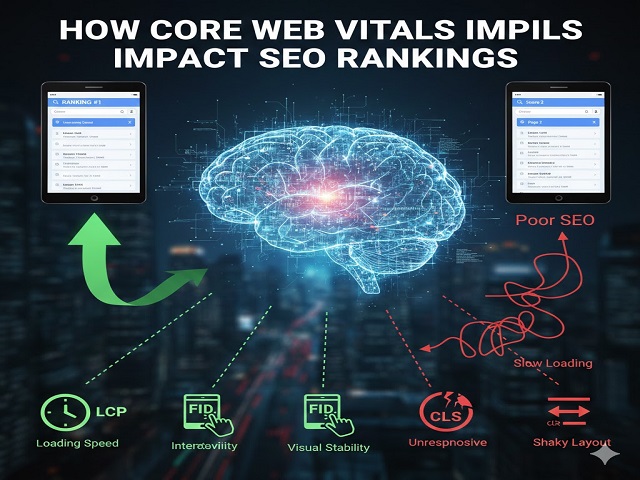
In the highly competitive US digital landscape, ranking on Google is no longer just about keywords and backlinks. User experience has become a critical differentiator—and Core Web Vitals play a key role in how Google evaluates website performance.
For US businesses competing in saturated SERPs, even small performance gaps can mean the difference between page one visibility and lost revenue. Google introduced Core Web Vitals as part of its Page Experience update to measure real-world user experience, making them an essential component of modern SEO strategies.
In this guide, we’ll explain how Core Web Vitals impact SEO rankings in the US, why they matter more in competitive markets, and how US businesses can optimize them effectively.
Are Core Web Vitals a Ranking Factor in the USA?
Yes—Core Web Vitals are a confirmed Google ranking factor, but with context.
Google uses Core Web Vitals as part of its Page Experience signals, alongside mobile-friendliness, HTTPS security, and safe browsing. While they may not outweigh high-quality content or strong backlinks, they act as a tie-breaker when multiple pages offer similar relevance.
In competitive US niches such as SaaS, eCommerce, healthcare, and legal services, many websites already have strong content and backlinks. In these cases, better Core Web Vitals can directly influence rankings by improving user satisfaction and engagement.
Why Core Web Vitals Matter More for US SEO
Core Web Vitals have a greater impact in the US market for several reasons:
- High competition: US SERPs are crowded with authoritative domains
- User expectations: Faster load times and smoother interactions are expected
- Mobile-first indexing: Most US searches happen on mobile devices
- Conversion impact: Performance directly affects revenue and lead generation
Google prioritizes delivering the best possible user experience to US users. If your website is slow, unstable, or unresponsive, it signals poor UX—making it harder to rank, especially for commercial keywords.
Understanding Core Web Vitals Metrics
Google evaluates Core Web Vitals using three key metrics that reflect real user behavior.
Largest Contentful Paint (LCP) & SEO Impact
Largest Contentful Paint (LCP) measures how quickly the main content of a page loads.
- Good LCP: Under 2.5 seconds
- Poor LCP: Over 4 seconds
A slow LCP creates a poor first impression, increases bounce rates, and reduces user trust. For SEO, this means lower engagement signals, which can negatively impact rankings in competitive US SERPs.
Common LCP issues include unoptimized images, slow servers, and heavy JavaScript.
Interaction to Next Paint (INP): The New UX Metric
Interaction to Next Paint (INP) replaced First Input Delay (FID) as Google’s primary interactivity metric.
INP measures how quickly a page responds to all user interactions, not just the first one. This gives Google a more accurate picture of real-world usability.
- Poor INP results in laggy buttons, delayed clicks, and frustrated users
- Google views this as a negative UX signal, especially for mobile users
For US businesses, optimizing INP is critical because user engagement directly impacts conversions and rankings.
Cumulative Layout Shift (CLS) & Ranking Stability
Cumulative Layout Shift (CLS) measures visual stability—how much elements move while a page loads.
Unexpected layout shifts (ads, banners, images loading late) frustrate users and increase accidental clicks. A poor CLS score reduces trust and usability, indirectly harming SEO performance.
- Good CLS score: Less than 0.1
- Poor CLS score: Over 0.25
Stable layouts contribute to better engagement and improved page experience signals.
How Google Measures Core Web Vitals for US Websites
Google relies heavily on real user data, not just lab tests.
Key measurement sources include:
- Chrome UX Report (CrUX): Aggregated data from real Chrome users in the US
- Google Search Console: Field data from actual visitors
- PageSpeed Insights: Combination of lab and field data
This means optimizations must focus on real-world performance, not just test scores.
What Happens If Your Core Web Vitals Fail?
Failing Core Web Vitals won’t cause an immediate penalty, but it can lead to:
- Rankings stagnating despite good content
- Lower visibility for competitive keywords
- Reduced crawl efficiency
- Higher bounce rates and lower conversions
In the US market, where competitors actively optimize performance, poor Core Web Vitals put your site at a long-term disadvantage.
Core Web Vitals Optimization Checklist for US Websites
Here’s a practical checklist to improve Core Web Vitals performance:
- Optimize and properly size images
- Use a fast hosting provider with US-based servers
- Implement a CDN for faster delivery across US locations
- Minimize JavaScript and remove unused scripts
- Improve server response time (TTFB)
- Preload critical fonts and assets
- Fix CLS caused by ads, banners, and dynamic elements
Businesses targeting US audiences should prioritize mobile performance, as Google primarily evaluates mobile Core Web Vitals.
Tools to Measure Core Web Vitals Accurately
Use these tools to monitor and diagnose performance issues:
- Google PageSpeed Insights
- Google Search Console Core Web Vitals Report
- Lighthouse
- Chrome DevTools
Rely on field data whenever possible, as it reflects actual user experience in the US.
Core Web Vitals vs Other Ranking Factors
Core Web Vitals do not replace traditional SEO factors.
They work alongside:
- High-quality, relevant content
- Strong backlinks
- Technical SEO fundamentals
Think of Core Web Vitals as a competitive advantage—they enhance rankings when other factors are already strong.
FAQs
Are Core Web Vitals a direct ranking factor?
Yes, they are part of Google’s Page Experience signals, influencing rankings when relevance is similar.
Do Core Web Vitals matter more for US websites?
Yes. Due to competition and user expectations, CWV has a stronger impact in US SERPs.
How long does it take to see ranking improvement after optimization?
Typically 4–8 weeks, depending on crawl frequency and data refresh.
Are Core Web Vitals more important than backlinks?
No. Backlinks remain more influential, but CWV can be a deciding factor.
What is a good Core Web Vitals score for SEO?
Passing all three metrics (LCP, INP, CLS) is ideal for strong performance.
Conclusion: Why Core Web Vitals Matter for US SEO Success
Core Web Vitals are no longer optional for US businesses. They influence rankings, user engagement, and conversions—especially in competitive industries. While they won’t replace content or backlinks, they enhance SEO performance when everything else is in place.
If your US website struggles with performance, improving Core Web Vitals—often with the help of SEO services in the USA—can unlock better rankings, higher engagement, and increased revenue.