One of the best ways to build a business online is to make sure it shows up in search results. But a lot of business owners have a hard time choosing between SEO vs. SEM when they plan how to build their firm. They both bring in traffic and make people aware of your business, but they do it in different ways. Businesses can make informed marketing choices that strike a balance between speed, sustainability, and affordability when they understand what makes each person unique.
The argument over what is SEM SEO has become more popular as the race for higher search ranks heats up. One focuses on long-term visibility, while the other gives you rapid exposure. The correct plan relies on your business goals, the amount of money you have, and the rate of growth you need to achieve. To find that balance, you need to know the difference between SEO and SEM and how each can help you succeed online in the long term.
Understanding SEO and Its Long-Term Impact
The goal of search engine optimization (SEO) is to make a website easier to find in organic search results. It means enhancing the content, structure, and user experience of a website so that search engines assign it a higher rank for relevant keywords. SEO doesn’t work immediately, but its effects become stronger over time.
Websites gain reputation and trust over time by constantly optimising. Search engines give these good ranks that bring in continuous visitors. Organic traffic remains constant even if marketing expenditures change. This means that SEO is a viable long-term strategy for firms seeking to expand over time.
A good digital marketing company in the USA can utilise SEO to help a business generate qualified leads without incurring ongoing ad expenses. It allows the brand to build trust, gives the business credibility in its field, and makes it appear to be a good solution.
Exploring SEM and Its Immediate Benefits
Paid strategies, such as Google Ads or Bing Ads, are the primary focus of Search Engine Marketing (SEM). SEO relies on organic ranking, whereas SEM allows firms to pay to be at the top of search results. Brands that require quick visibility or want to promote offers that are only good for a short time often use it.
SEM in digital marketing might help you get immediate victories. Ads can start getting clicks and conversions within hours of starting a campaign. This is why SEM is ideal for new businesses or those launching new products in competitive markets. You can measure it, adjust it, and make changes in real-time based on its effectiveness.
But the growth it brings usually ceases when ad budgets are put on hold. That’s why SEM alone may not be a good long-term strategy. When used in conjunction with SEO tactics, SEM yields the best long-term results.
What is the difference between SEO and SEM?
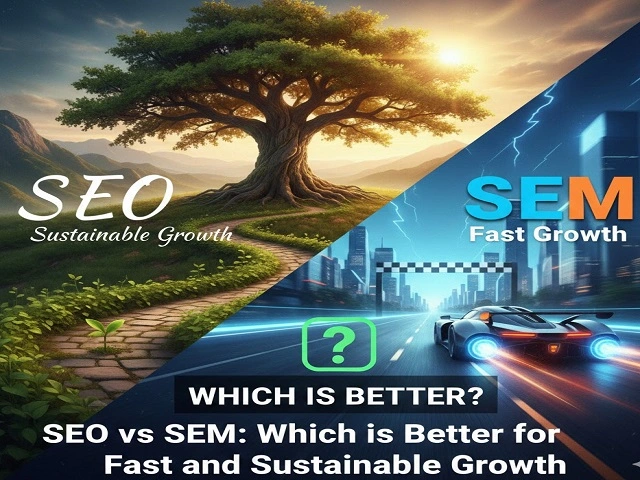
Time, cost, and long-term effects are the main differences between SEO and SEM. SEO is free and takes time to build up, while SEM is paid for and provides results immediately. SEO requires ongoing work on aspects such as creating content, acquiring backlinks, and enhancing technical elements. SEM, on the other hand, generates traffic immediately but requires ongoing payments.
When businesses ask SEO vs SEM, which is better, the answer depends on what they care about most. SEO is the better base if you want to build brand authority and grow over time. If you want to get leads rapidly or test the market, SEM is the way to go.
In real life, SEO builds a brand’s reputation over time, whereas SEM makes it easier to find when you need it. Both are important, and when employed together, they make a balanced growth plan that is both quick and long-lasting.
Why SEO Builds Sustainable Growth
Digital consistency relies on SEO. It helps businesses earn awareness, not buy it. Websites may stay on top for years with good content and UX. This attracts organic visitors who are interested in the brand’s products.
Cost-effectiveness is another benefit. Search engine optimisation doesn’t demand ongoing spending like paid adverts. Website authority boosts returns. SEO is essential for long-term brand strength in digital marketing.
SEO matches changing consumer behaviour. Users trust organic results over advertisements. A high ranking gives a business credibility that advertising cannot.
Why SEM Accelerates Short-Term Growth
SEO helps things stay the same, whereas SEM helps things move faster. It’s the fastest approach to reach those who are looking for certain goods or services. SEM helps firms contact the right people at the right time by focusing on certain keywords.
You may customise campaigns by location, time, or device, giving you complete control over how well they work. Due to this flexibility, SEM in digital marketing is crucial for new launches, promotions, and seasonal advertising campaigns. Businesses can quickly determine their return on investment (ROI) and optimise their ads for better results.
However, there is a downside to SEM’s speed: its benefits disappear when you stop paying. Therefore, it should complement an organic plan, not replace it.
Balancing SEO and SEM for Optimal Results
The best thing to do is not to choose between SEO vs. SEM, but to employ both. SEO creates trust over time, whereas SEM speeds up visibility and gives you insights based on data. They operate together to help you in two ways: they provide you fast effects and help you make progress over time.
Businesses can use SEM to figure out which keywords contribute to sales and then use that information to make their SEO better. On the other side, SEO makes sure that the brand is still easy to find even when ad costs are low. The goal of modern digital marketing is to find a balance between paid effectiveness and organic longevity.
If you work with a digital marketing company in USA that has been around for a while, this integration should go smoothly. Professionals can make sure that both projects work together, which will make sure that branding, audience targeting, and measurable growth are all the same across all digital channels.
While rapid expansion may seem alluring, steady growth fosters real stability. SEO’s reputation and SEM’s speed work well together to give you the best of both worlds: momentum and endurance. At SAVIT, we focus on building digital strategies that work now and ensure they remain visible in the future.