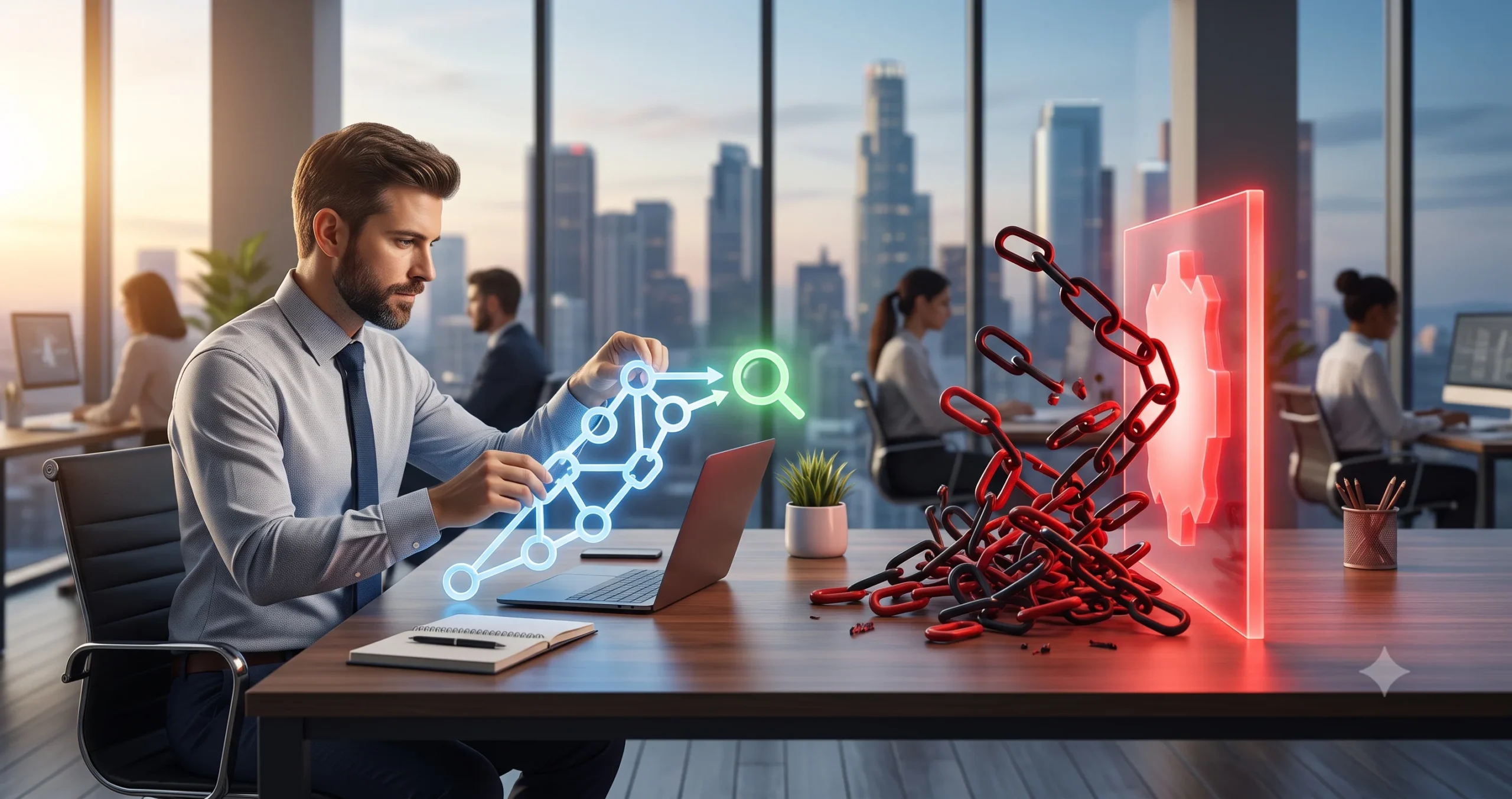
A Shopify developer is able to create a quick and efficient shop. However, a quick and efficient shop that no one finds will never become a business. This is the distinction between what a developer does and what a Shopify SEO company does. Let’s see how you can understand what your store requires at this moment.
What does a Shopify developer do vs. what does a Shopify SEO agency do?
The confusion between the two is easy to understand due to the fact that their areas overlap in terms of a single website. However, their work and respective results are totally different.
The Shopify Developer is accountable for the development and management of the technology infrastructure of the store. The Shopify Developer’s duty is to make sure that the website works well through customisation of themes, installation of apps, improving the checkout process, making pages fast and other features that are not available in the Shopify framework.
A Shopify SEO agency will ensure that the shop shows up in the search. The primary role of this firm is to make sure that the right individuals locate the store as they look for what the store offers. This includes keyword research, on-site optimisation, content creation, setting up SEO parameters for Shopify based on URL structure and indexing, backlinking, and performance analysis that converts organic search into an acquisition stream.
Both matter. Neither substitutes for the other. A beautifully built store with no SEO strategy will rank for almost nothing. A strong SEO strategy on a slow, broken store will convert poorly. The question is not which one to choose; it is which one the business is currently missing.
Can a Shopify developer handle SEO?
Some Shopify developers have SEO knowledge, and some basic SEO work happens naturally in the development process. A developer who structures clean URLs, compresses images, implements proper heading hierarchy, and avoids generating large numbers of duplicate pages is doing work that benefits search performance.
But development-level SEO is a floor, not a strategy. It prevents obvious technical mistakes. It does not build the keyword architecture that matches the store’s products to the searches buyers are actually running. It does not create the content that ranks for informational queries that feed the top of the funnel. It does not build the backlink authority that separates a store ranking on page one from one stuck on page four. And it does not manage the ongoing optimization cycle that SEO requires as competitors move, algorithms update, and search behavior changes.
SEO for Shopify websites at a competitive level requires dedicated expertise, not a development skillset with SEO awareness on the side. When a store reaches the stage where organic search needs to become a primary acquisition channel, the development lane and the SEO lane need to be staffed separately.
What are the most common Shopify SEO problems that require an agency to fix?
Shopify is a well-engineered platform, but it creates several structural SEO challenges that are specific to how the platform handles content and URL architecture. Many of these problems are invisible to a developer focused on functionality but are significant drivers of poor organic performance.
The most common Shopify SEO services
engagements begin by addressing:
- Duplicate content from faceted navigation: Shopify creates duplicate URLs for the same product based on variations within the product or its appearance in different categories. This is because search engines consider such a case to be duplicate content. If left unmanaged, it results in diluted ranking signals across duplicate URLs rather than the canonical one.
- Shallow category pages: collection pages in Shopify are often thin, carrying only product tiles and minimal text. Google evaluates page quality partly on content depth. Collection pages without keyword-rich descriptive content, buying guides, or structured information rarely rank competitively for the category-level searches that drive the highest purchase intent traffic.
- Missing or weak product page optimization: product titles optimized for conversions are not always optimized for search. A product named the way a brand thinks about it is often not the way a customer searches for it. Misaligned titles, missing long-tail keyword targeting in descriptions, and absent structured data are consistent conversion killers in Shopify SEO.
- Bloated or redundant sitemaps: Shopify creates sitemaps automatically, but those may contain URLs which shouldn’t be indexed, such as internal search results pages, collection variants with tags, and paginated duplicates. If this problem is left unmanaged, the crawl budget will be spent on irrelevant URLs.
- Internal linking gaps: there is a lack of proper interlinking among different products. Good internal linking spreads page authority throughout the catalogue and helps the search engine to comprehend the topic of the website. This is something that cannot be done through default Shopify theme settings.
- Missing blog and content strategy: Shopify comes with a native ability to create blogs, which most sites do not utilise effectively. A blog/content strategy that responds to customer questions, targets informative keywords, and provides proper internal linking back to product and collection pages would be an extremely high ROI SEO move for the Shopify store.
When should a store bring in a Shopify SEO agency?
There are specific inflection points where the need for dedicated ecommerce SEO services becomes clear. Not every store needs a full SEO agency from day one. But delaying the engagement past these signals costs more in lost organic opportunity than the agency investment saves.
- The store has been live for six or more months and organic traffic is flat: if a store has been published long enough for Google to have indexed it and traffic is not growing, the site is not competing effectively in organic search. This is an SEO problem, not a development problem.
- Paid acquisition costs are rising, and there is no organic offset: stores that are entirely dependent on Google Shopping, Meta ads, or influencer traffic are vulnerable to platform cost increases and algorithm changes. Building organic search as a parallel channel reduces that concentration risk. A Shopify SEO agency builds the organic infrastructure that compounds over time.
- The catalog is expanding: adding products and collections without an SEO-informed architecture plan creates the duplicate content and thin page problems described above at scale. Bringing in SEO expertise before or during catalog expansion is substantially more efficient than retrofitting SEO onto a large, poorly structured catalog after the fact.
- Competitors are outranking the store for high-intent keywords: if searches for the main product categories of the store bring up other websites above the store itself, then those competitors have worked on their SEO. It takes an SEO campaign to bridge that gap.
- The store is preparing for a platform migration or major redesign: switching from Shopify to a new platform, or having a large-scale redesign performed, without proper SEO consideration usually leads to a massive drop in rankings that takes months to correct. Proper redirecting, canonicalization, and crawl testing while performing platform migration is an ecommerce SEO agency project, not a developer one.
What do ecommerce SEO services for Shopify actually include?
Ecommerce SEO services for a Shopify store are broader than generic SEO services because they account for the specific structure, behavior, and challenges of an e-commerce site. A comprehensive engagement typically includes:
- Technical SEO audit: a systematic review of the store’s crawlability, indexation, duplicate content, page speed, Core Web Vitals, structured data, and the Shopify-specific issues described above, with a prioritized remediation plan
- Keyword architecture: mapping keyword targets to the store’s category and product hierarchy, identifying gaps between what the store sells and what buyers search for, and building the content plan that closes those gaps
- Collection page optimization: adding keyword-rich content, improving heading structure, implementing FAQ schema, and building the internal linking architecture that positions collection pages as authoritative landing pages for category-level searches
- Product page optimization: title tag optimization, description rewriting for search intent alignment, structured data implementation for rich results including ratings, price, and availability, and image alt text optimization
- Content program: a blog content strategy that targets informational and comparison queries, feeds the top of the funnel, and links strategically to collection and product pages to distribute authority across the catalog
- Link building: acquiring backlinks from relevant, authoritative sources in the store’s category and adjacent markets, which remains one of the strongest signals of domain authority in Google’s ranking algorithm
- Ongoing optimization and reporting: monthly performance reviews tracking rankings, organic traffic, conversion rate from organic sessions, and revenue attributed to organic search
How is Shopify SEO different from SEO on other platforms?
SEO for Shopify websites shares the same fundamental principles as SEO on any platform: relevance, authority, and technical accessibility. But the implementation differs in ways that make platform-specific experience genuinely valuable.
The URL structure created by Shopify is one that is predetermined by the platform itself, so some of the architectural decisions that could have been made in a website built from scratch by an SEO specialist are unavailable in Shopify. The SEO expert thus has to take a different approach towards managing the canonicals compared to what he/she would do with, say, WordPress.
The apps on the Shopify platform also present SEO challenges that don’t arise on other platforms. These are apps that add content, scripts, or redirections to your site that can impact crawlability and load time without you being aware unless you have a Shopify audit. An agency that lacks Shopify expertise might overlook these issues.
Shopify’s liquid templating system means that schema markup, canonical tags, and hreflang implementation work differently than they do on other platforms. An agency that understands Shopify’s templating layer can implement SEO changes efficiently across the full catalog without requiring custom development work for each change. An agency that does not understand it will either implement changes incorrectly or create a dependency on developer resources for every SEO update.
What makes a Shopify SEO agency the best choice for growing stores?
A Shopify SEO agency that specializes in e-commerce brings a combination of platform fluency, category expertise, and the track record of moving real e-commerce stores up the rankings in competitive product categories. The distinction between a generalist SEO provider applying a standard framework to a Shopify store and a specialist who has built dozens of Shopify SEO programs is visible in the strategy quality, the implementation efficiency, and ultimately the organic revenue outcomes.
The best agencies also realise the commercial aspect of this kind of search engine optimisation work. When it comes to SEO for a Shopify store, there is no use in simply driving traffic to it. What SEO is all about is ranking those pages that are meant to rank for certain queries and then turning this traffic into sales through an efficient process that makes this channel more profitable than any paid one.
It is this kind of commercial perspective that makes a difference between an ecommerce SEO agency focused on Shopify and an ordinary SEO company.
How do you find the best SEO agency in the USA for Shopify?
The market for Shopify SEO services in the U.S. is competitive, and the quality range is wide. Finding the right seo agency for a Shopify store requires looking past the general claims.
- Ask for Shopify-specific case studies: data from a Shopify store is more relevant than data from another platform. Request case studies that include an increase in traffic and sales revenue on stores in the same category.
- Ask how they handle Shopify’s duplicate content challenges: a provider that cannot describe how they deal with faceted navigation and duplicate content issues within Shopify is not aware of the problems unique to the platform.
- Ask for sample deliverables: what does a collection page optimization look like in practice? What does a monthly report include? The specificity and quality of the answer reveals the standard of the work.
- Ask about the content program: an seo company that focuses only on technical SEO and link building without a content strategy is leaving the top of the funnel unaddressed. Content is a substantial portion of what drives organic growth for Shopify stores.
- Ask how they measure success: revenue from organic search and cost per organic customer should be primary metrics, not just rankings and traffic volume.
The right partner answers these questions with specifics, examples, and a clear point of view on what works for Shopify stores specifically. Agencies that give generic answers are applying a generic approach.
Why Savit Interactive?
We have built SEO programs for Shopify stores across a wide range of product categories and competition levels. At Savit Interactive, our Shopify SEO services are built around the commercial outcomes that e-commerce businesses actually care about: organic traffic that converts, category pages that rank, and an organic channel that reduces paid acquisition dependence over time.
Our team handles the full scope of Shopify SEO, from technical audits and architecture decisions to content programs and link building, with reporting that connects every deliverable to revenue. We understand Shopify’s platform-specific constraints and opportunities, which means our implementations are efficient and our strategies are realistic about what the platform allows.
If your store is not generating the organic traffic its product range deserves, or if you are heading into a cataloge expansion or platform migration and want to protect your search performance through the transition, we are ready to walk through exactly what a Shopify SEO program would look like for your specific situation.
Visit our Shopify SEO agency page to learn how we structure engagements and what Shopify store owners can expect from the first 90 days.