The success or failure of a mobile app largely depends on its visibility. With millions of apps available, being noticed on Google Play and the Apple App Store requires more than just good design or functionality. This is where App Store Optimization (ASO) comes in. It helps increase downloads, improve rankings, and attract more users to the app.
Choosing the correct tools for ASO is important if you want to see real results. These tools help developers monitor their competition, track conversion rates, and optimise their keywords. Using the correct mix of ASO optimization tools, whether they are free or commercial, makes sure that an app gets to the right people and keeps growing over time.
Understanding ASO and Its Importance
The goal of App Store Optimisation is to make an app easier to find and use in app stores. It works similarly to SEO for websites, with a focus on optimising titles, descriptions, images, and keywords. The goal is to attract more people to download the app for free and engage those who are particularly interested in its features.
Keywords are only part of ASO. It’s essential to understand what influences user behaviour, such as the design of icons, screenshots, reviews, and the frequency of updates. With good app optimization tools, organisations can keep track of all of these things in one spot. Even a well-made app may not be found if it doesn’t have good ASO.
Why using ASO tools matters
The app market uses data. Ideas matter as much as creativity. Analytics from ASO services and tools reveal how consumers discover apps, which keywords drive traffic, and where adjustments are necessary. Free tools provide overviews, while premium ones offer competitive and predictive data.
Teams get clarity when they use the best ASO tools. Data-driven decisions can boost downloads and revenue, rather than relying on guesswork. These technologies transform complex data into actionable insights, ranging from keyword rankings to user retention tracking and analysis.
Free ASO Tools Worth Exploring
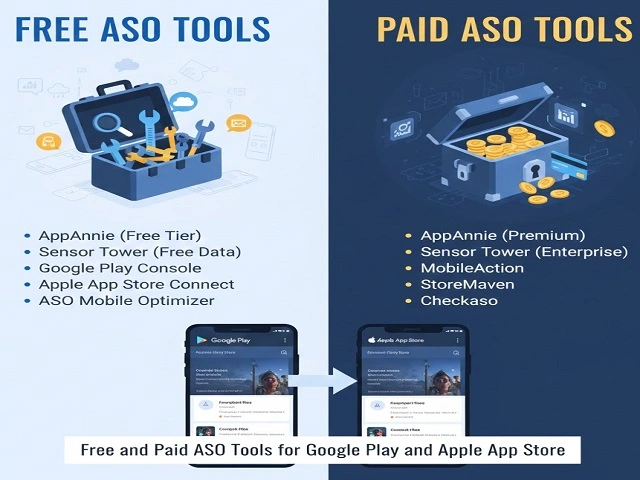
Startups and independent developers should start with free ASO optimization tools. Many provide free keyword tracking, performance monitoring, and visibility assessment.
Some of the best free tools for ASO offer keyword ideas, search traffic analytics, and review management. Developers may track app rankings and see how modest adjustments affect visibility. Free tools regularly compare competitors, helping brands learn from their strategy.
While these platforms may not provide deep insights, they help explain how app stores evaluate listings. This improves developers’ methods before upgrading to commercial versions.
Paid ASO Tools and Their Advantages
Paid ASO systems do more than just look at the surface. They provide you with a wealth of information that helps you refine your marketing plans and achieve results more efficiently. A paid app optimization tool can show you which keywords lead to sales, which images customers like, and which areas have the most room for growth.
A/B testing is a feature of many premium solutions that lets you compare different app titles, images, or descriptions. They also utilise analytics tools, which enable developers to track the performance of both organic and paid visitors.
Investing in the best ASO tools can ensure that your business grows over time. Free tools give you a basic idea of what to do, whereas premium products provide you with exact instructions. For businesses that are growing, the time saved and knowledge acquired often make the investment worthwhile.
Keyword Optimization and Tracking
Keywords remain the cornerstone of ASO. Effective keyword management influences whether an app appears in search results or not. High-performing keywords that match user intent are found by ASO services using advanced techniques.
Free ASO optimization tools track term ranks and recommend trend-based alternatives. Paid tools examine seasonal fluctuations and new phrases. They assist developers in strategising upgrades and maintaining rankings.
Keyword tracking aids localisation. Apps targeting different areas might tailor keywords to each market for greater reach and cultural relevance.
Competitor Analysis Using ASO Tools
Knowing rivals is key to growth. Most tools for ASO analyse competitor apps’ keywords, graphics, and ratings. This analysis reveals which techniques are effective and where they can be improved.
Paid ASO platforms include historical data. Businesses can monitor rival rankings and user sentiment. This knowledge informs better marketing and product initiatives.
Developers may make informed decisions without assumptions with this knowledge. It ensures that every update aligns with user trends and outperforms competitors.
App Performance and Conversion Metrics
Visibility isn’t enough. Conversion rate optimisation assures app listing visitors download it. App optimization tools evaluate images, videos, and call-to-actions to determine conversion rates.
Average downloads and reviews are shown in free versions. Premium tools determine which factors most affect conversion. A simple colour scheme or headline modification could boost installs. These insights blend aesthetics and strategy, increasing visibility and user engagement.
Choosing The Right ASO Strategy
Your business goals, budget, and growth timeframe will determine the best ASO strategy for you. A fresh developer might use free ASO optimization tools to get their name out there. Bigger businesses may invest in more powerful paid tools to gather more information and make more accurate predictions.
Often, the best results are achieved by combining both free and commercial options. You can use free platforms to keep an eye on things, but paid products are better for in-depth testing and analysis. Both help make a more complete ASO plan that keeps your site visible over time.
When you hire experts to offer ASO services, you can be sure that your strategy, implementation, and analysis will all be in sync. Professionals may review tool data, suggest improvements, and refine listings to ensure ongoing success.
The Future Of ASO
The metrics that determine app store rankings are changing. Visibility algorithms now prioritise engagement, retention, and app quality. AI-driven insights, automation, and personalisation analytics are likely to be in future app optimization tools.
Businesses that improve their ASO strategy will succeed. Businesses that neglect it risk being eclipsed by competitors who understand the data-to-downloads process. The right tools and consistent optimisation will determine future success.
A good ASO strategy utilizes the correct tools and consistently works hard. Free tools are easy to use, but expensive ones are more accurate and detailed. At SAVIT, we believe that balancing is the key to long-term app success. This involves utilising findings, refining your plan, and responding to emerging trends.