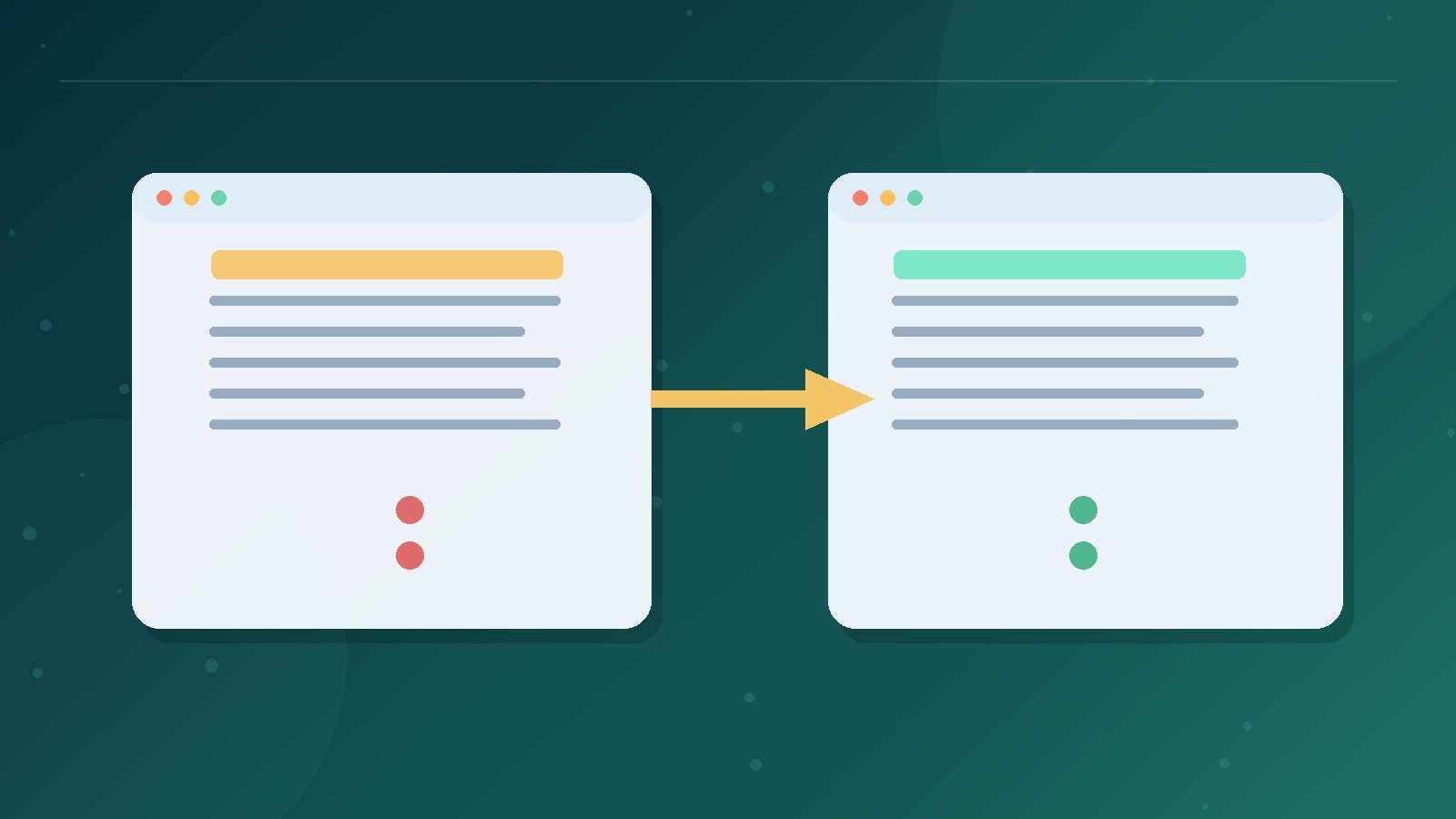
Website relaunches are a familiar agency milestone: new design, improved navigation, cleaner code and a launch date everyone is working toward. They can also quietly remove search traffic if old URLs disappear, important content changes, redirects are mishandled or measurement breaks. A visually successful launch does not prove that the move was successful for the people who find the business through search.
A website migration SEO checklist should therefore be part of the project’s acceptance criteria, not an optional audit delivered after the new website goes live. For web development and creative agencies, migration work is an opportunity to protect client trust and introduce an ongoing technical SEO service. The value is risk reduction, careful testing and a clear decision record, not a promise that rankings cannot fluctuate.
Google’s official site migration guidance explains why URL mapping, redirects, internal links and post-launch monitoring matter. The operational plan below turns those principles into a cross-team project that a development agency can manage with internal or white-label SEO support.
Establish what is changing before anyone touches redirects
Not every launch is the same type of migration. A new visual design on unchanged URLs has different risks from a domain move, a CMS replacement, a consolidation of product categories or an international domain restructure. Begin by listing which systems, URLs, templates, languages, content types and tracking configurations will change.
The project owner should record the source environment, target environment, planned date, decision makers and rollback considerations. Include any separate blog, help center, booking engine or store subdomain. If these are omitted from scope, they can disappear in a migration even while the main site looks correct.
A useful first meeting asks what must remain stable and what the business wants to improve. The client may want simpler navigation while preserving its best-performing landing pages. If the new design removes a page that currently attracts qualified enquiries, that is a strategic choice requiring explicit review, not an incidental design decision.
Capture the search baseline early
Before changing the site, collect the current URL inventory, key landing pages, important queries, crawl coverage, conversions and technical conditions. Record the measurement date and data source. Google Search Console, analytics and server or CMS exports may each reveal different parts of the story.
Do not rely on a single crawl. A crawler sees accessible links and pages, but it may miss orphaned URLs, pages blocked by authentication, or historical landing pages no longer linked in navigation. Combine current site data with available XML sitemaps, analytics exports, Search Console pages and CMS lists. Note data gaps rather than silently excluding unknown URLs.
Prioritize pages based on business importance, search exposure, backlinks and conversion value. A forgotten article with several strong links may be a more important migration asset than a newly designed page with no users. Keep an archive of essential page content and metadata so missing elements can be investigated after launch.
Build a one-to-one URL mapping where possible
Every meaningful old URL needs a deliberate destination. The preferred target is usually the most relevant equivalent page, not the homepage. If two old pages are genuinely consolidated into one stronger resource, document the editorial reasoning and the target. If a resource is permanently removed with no replacement, choose the appropriate response rather than forcing an irrelevant redirect.
Maintain a mapping table with the old URL, target URL, page type, decision reason, redirect requirement, tester and result. It should be reviewed before the new site is frozen. Large sites can automate portions of the audit, but human review remains necessary for high-value pages and ambiguous content changes.
Avoid long redirect chains and broad rules that unexpectedly send unrelated URLs to a generic page. A redirect is not simply a technical checkbox; it shapes where existing visitors and referring sites arrive. Google recommends server-side permanent redirects for moves that are intended to be lasting.
Preserve what makes important pages useful
A redesign sometimes reduces a detailed service page to a beautiful hero banner and three short cards. The result may look cleaner while removing answers that buyers and search systems previously relied on. Compare the information architecture and substantive content of high-priority pages before approving the new templates.
Preserve relevant headings, service details, pricing explanations when appropriate, location information, product specifications and useful FAQs. Do not keep outdated or inaccurate text merely because it once ranked. Instead, make an explicit editorial decision about what to retain, update or retire.
The design team and SEO specialist should review these changes together. A high-ranking page may carry critical product wording that a design mockup overlooked. Conversely, a proposed SEO phrase may undermine the clarity of the user experience. The objective is an accurate page that works for users, not a collection of inherited keywords.
Audit technical signals on staging
Review indexability, robots directives, canonical tags, internal links, XML sitemaps, structured data, mobile behavior and important rendering paths. A staging environment may correctly block indexing; the danger is accidentally carrying those restrictions into production. Record which rules should change at launch and who is responsible for changing them.
Check that canonical URLs reference the intended production destinations. For multilingual or multi-regional sites, review relevant language annotations and the page relationships they imply. For e-commerce, include product and category template behavior, faceted navigation and inventory data.
Test navigation and content links, not merely the homepage. A site’s most important conversion journey may pass through a service detail page, appointment form, pricing section or product checkout. If JavaScript is required to expose essential text or links, verify what is rendered and accessible in the actual target environment.
Test tracking and conversions before the launch window
A migration can make acquisition reports misleading if measurement changes during the move. Confirm the intended analytics property, consent configuration, important events, form submissions, call tracking and CRM handoff. Document which historic comparisons will remain valid and which may require a note about methodology changes.
Run test conversions on staging where feasible, while preventing test data from contaminating production reporting. On launch day, validate the production paths again. A successful form confirmation on screen does not guarantee that the enquiry reached the sales team, and a visible analytics event does not prove that a CRM record was created.
Assign an owner to each check. Avoid a situation in which the development team thinks marketing owns tracking while marketing assumes the developer has handled it. The verification record should include timestamps and test outcomes rather than a casual message saying that everything looks fine.
Launch with a decision room, not a checklist passed around by email
On the day of deployment, agree on a short command structure. The release owner coordinates the site; the SEO reviewer checks URLs, redirects and discoverability; the analytics reviewer tests key events; the account manager handles client communication. For complex migrations, set a decision window for stopping the release if major defects appear.
Verify a representative sample across major page templates, important redirected URLs, high-value landing pages, mobile navigation and lead generation. Confirm that a new sitemap is available and that production indexing directives are appropriate. Track defects by severity and business impact instead of burying them among minor cosmetic tasks.
Keep one timeline of release events. If search performance later changes, the team needs to know whether the shift followed a URL cutover, content reduction, analytics change or unrelated market movement. A dated release log is often more useful than a large folder of undated screenshots.
Monitor the first days and weeks systematically
After launch, check for redirect failures, unexpected not-found responses, canonical inconsistencies, indexation changes, broken internal links and conversion defects. Review key page groups rather than using the total traffic line alone. Search engines need time to crawl and interpret the new structure, so not every fluctuation indicates a mistake.
Google notes that significant migrations can produce temporary search-result fluctuations. This is not a reason to ignore clear technical failures. Distinguish expected adjustment from fixable problems using the baseline, URL map, crawl results and affected page groups.
Set a fixed review cadence for the first few weeks, then continue with a longer-term comparison. Communicate the facts to the client: which old URLs have valid new destinations, which priority pages are discoverable, what conversion events work and what remains unresolved.
Make migration services a responsible recurring offer
Agencies can package a migration readiness audit, release-day QA and post-launch monitoring as a defined service. That is a clearer commercial proposition than promising “zero SEO loss,” which no team can guarantee. It also creates a natural transition into ongoing site-health monitoring and search improvements after the new site stabilizes.
In a white-label arrangement, the specialist can supply audits, maps and evidence while the development agency implements approved changes. Write that responsibility into the project plan. Our technical SEO outsourcing guide explains how to scope specialist work when engineering capacity is separate from SEO review.
If the agency also wants to turn website projects into ongoing retainers, our web design agency SEO revenue guide examines the commercial handoff. A migration is one excellent moment to introduce the value of sustained technical oversight.
A launch acceptance sheet worth keeping
The final sign-off sheet can be compact: old and new URL maps reviewed; priority redirects tested; important page content approved; production robots and canonical settings checked; sitemaps submitted or updated; navigation tested on relevant devices; tracking events verified; named owners assigned to remaining defects. Store the evidence beside each item.
Give the client a short exception report. If an old resource was intentionally removed, document why. If a low-priority warning remains, state the risk and scheduled review. If a key page has lost content because of an approved brand decision, flag the search implication without secretly reversing the design choice.
A responsible sign-off is not a blanket statement that the website is perfect. It is a documented decision that the release meets agreed criteria, that known exceptions are visible, and that the team is prepared to respond if monitoring reveals a new issue.
Frequently Asked Questions
Will a website redesign automatically improve SEO?
No. A redesign can improve navigation, content, performance and implementation quality, but the effect depends on what changes. It can also introduce new problems. The safest approach is to compare the old and new experiences against defined user and search requirements.
How long will search rankings take to recover after a move?
There is no universal timetable. The size of the site, nature of the changes, crawl behavior and technical accuracy all matter. Treat early results as observations to investigate rather than making a fixed recovery guarantee.
Is a 301 redirect enough to preserve performance?
A permanent redirect is important for many URL changes, but it is not the whole migration. The destination’s relevance, internal links, canonical signals, content and measurement configuration also need attention.
Can an external SEO team own the migration entirely?
It can coordinate the specialist SEO component, but deployment authority normally remains with the site’s owner or developer. A reliable project assigns each task and acceptance test to a named role.
The best migration is the one clients barely notice because the right details were checked before they became problems. That outcome requires cooperation between designers, developers, content owners, analytics specialists and search reviewers, with evidence available when questions arise.